
Walk down the THCP aisle and you’ll meet the same molecule wearing three different numbers: “80% THCP,” “1,000mg per gummy,” and “15,000mg total.” They’re all “potency” — and they mean different things. Here’s how to read each one, and how to compare products without being fooled by the label format.
The Three Numbers, Defined
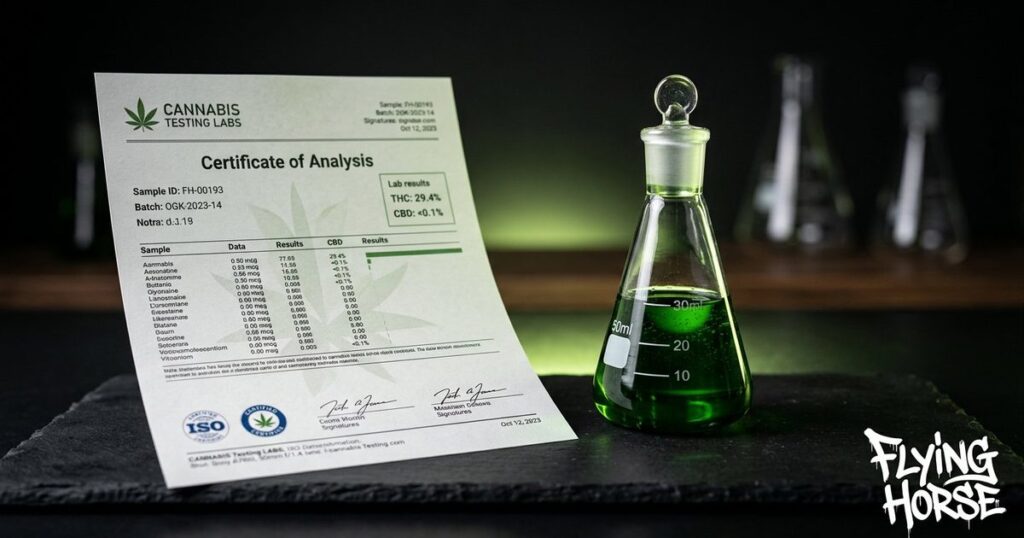
- Percent of dry weight (the extract number). “THCP 78.4%” means the extract is 78.4% THCP by weight — the rest is other cannabinoids, terpenes, and lipids. This is the COA’s native unit (how to read a COA). It tells you the quality of the concentrate, not what’s in your product.
- Milligrams per piece (the dose number). “1,000mg per gummy” means each gummy contains 1,000mg of THCP — the number that matters at the moment of dosing. This is the label that should drive your purchase: our THCP Blend gummies standardize at 1,000mg/piece because it makes the dose math exact (a quarter piece = ~250mg, the dosing chart works from it).
- Total jar/device (the value number). “15,000mg” or “96,000mg” is just count × per-piece: 15 × 1,000 or 96 × 1,000. It’s a value comparison (cost per jar), not a potency comparison — a 96ct jar isn’t six times more potent per gummy than a 15ct jar, it’s six times the inventory.
Why the Units Get Confused (and How Brands Exploit It)
- “Big total” marketing. A 96,000mg jar sounds enormous; per piece, it’s the same 1,000mg as anything else. Compare per-piece or per-gram, never per-jar, when judging strength.
- Percent vs. mg mismatch. “80% THCP” on a gummy label is meaningless without the gummy’s weight — 80% of what? Legitimate labels state mg per piece (and per the COA). A percent-only label is hiding its dose math.
- THCA vs. THCP labeling. Some products label the acid form (THCA) and the active form (THCP) — they convert with heat (decarboxylation), so “15,000mg THCA” and “15,000mg THCP” can describe similar total cannabinoid load in different formats. Know which one your label is stating: ours are explicit (the THCP jars vs. the THCA jars are different products by design).
The Honest Comparison Method
- Convert everything to mg per dose unit — mg per gummy, mg per preroll (divide jar mg by count, or use the stated per-roll figure), mg per gram of distillate for vapes.
- Check the COA behind the label — the stated number should match the batch report within normal analytical variance (ours are all published).
- Then compare cost per mg — that’s the value axis; the bulk buying guide runs the math on our lineup.
Dose, Not Percent, Is What You Feel
Your body experiences milligrams consumed, not percentages printed. A “90% THCP” extract in a 100mg gummy and a “75% THCP” extract in a 300mg gummy are a 100mg dose and a 300mg dose — the second is three times the experience, whatever the percentages suggest. Start from the per-dose number, start low (dosing guide), and let the COA verify the rest. Product-level numbers: every page in the lineup states it plainly.